
What Is AGI? Future of Super-Smart Machines Explained
Artificial intelligence is already changing the world around us. Today, AI can write articles, generate images, recommend products, answer questions, automate customer support, and even assist in software development. However, as powerful as these tools look, they are still limited in a very important way. Most current AI systems can only perform specific tasks within narrow boundaries. They do not truly understand the world the way humans do, and they cannot adapt across completely different situations without being retrained.
This is where the concept of Artificial General Intelligence, or AGI, becomes so important. AGI is often described as the next major leap forward in technology, because it represents a future where machines are no longer just specialized tools, but intelligent systems capable of thinking, learning, and reasoning broadly like humans. Many researchers believe AGI could transform society more deeply than the internet or smartphones ever did. At the same time, it raises serious questions about safety, ethics, and the future of work. In this article, you will understand what AGI really means, how it differs from today’s AI, how it might work, and why it could shape the future of super-smart machines.
What Is AGI?
Artificial General Intelligence refers to a type of machine intelligence that can perform any intellectual task that a human being can do. Unlike today’s AI models, which are trained for specific purposes such as writing text or recognizing images, AGI would have the ability to learn and apply knowledge across many different fields without needing separate systems for each task. In simple terms, AGI would not be limited to one skill. It would be flexible, adaptive, and capable of solving unfamiliar problems in new environments, much like humans do every day.
The key idea behind AGI is general intelligence. Humans are not born knowing everything, but they have the ability to learn continuously, reason through new challenges, and transfer knowledge from one area to another. For example, a person who learns mathematics can apply logic to business decisions, engineering, or even personal finance. AGI would represent machines reaching that same level of broad intelligence. Instead of being a tool that only follows patterns, AGI would become a system that understands context, makes decisions, and adapts in a human-like way. That is why AGI is considered one of the most revolutionary goals in AI research.
AGI vs Narrow AI: What’s the Difference?

To understand why AGI is such a big deal, it is important to recognize that most AI today is not general at all. The systems we currently use are examples of Narrow AI, sometimes called Weak AI. Narrow AI can be extremely good at one specific task, but it cannot move beyond that task. For instance, a chess-playing AI can defeat world champions, but it cannot drive a car or hold a meaningful conversation. Similarly, a language model can write an essay, but it cannot independently run a business or conduct real-world scientific experiments.
This limitation exists because narrow AI is built around pattern recognition and task-specific training. It does not truly understand concepts the way humans do. AGI, on the other hand, would be capable of applying intelligence across many domains. A true AGI system could learn physics, then use that knowledge to build technology, then adapt to a new problem in healthcare, all without needing separate models. This ability to transfer learning and reason across situations is what makes AGI fundamentally different. It is not about being better at one task, but about being capable in almost every intellectual area.
Why AGI Matters So Much
AGI matters because it represents a turning point in what machines could become. If achieved, AGI would move AI beyond being an assistant that helps humans, into being an independent intelligence capable of solving problems at a level comparable to human thinking. This could bring enormous benefits, such as accelerating scientific discovery, improving education, solving global challenges, and transforming industries.
At the same time, AGI could disrupt society in ways we cannot fully predict. General intelligence is the foundation of human progress, and if machines gain that capability, the balance of economic power, labor markets, and decision-making could shift dramatically. Businesses that harness AGI could become far more efficient than competitors. Governments may rely on AGI for strategic planning. Entire industries could be reshaped. That is why AGI is often described as both exciting and dangerous. It is not simply a new tool. It could become one of the most powerful inventions in human history.
How Would AGI Work? (Simple but Deep Explanation)
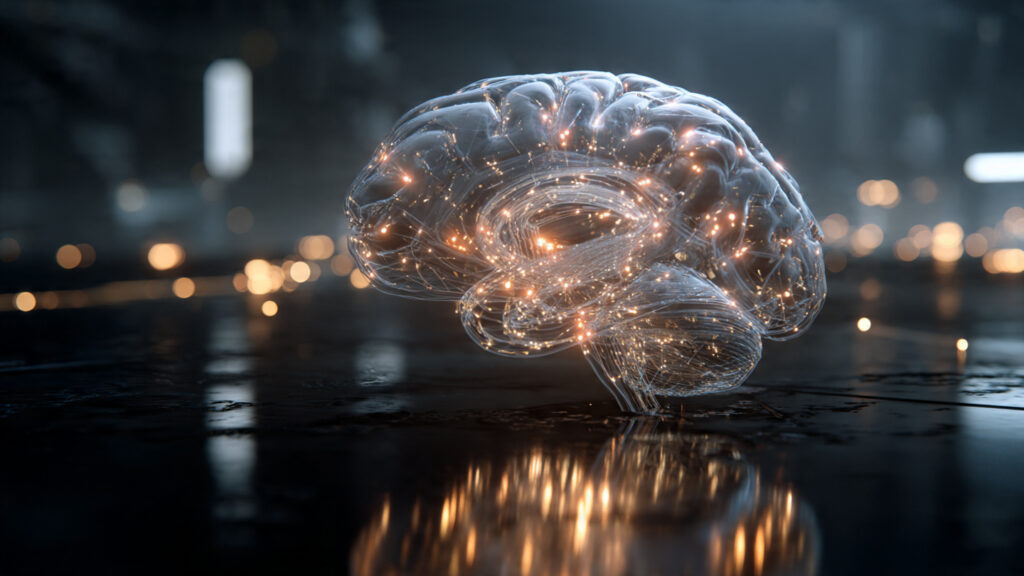
AGI does not exist yet, but researchers believe it will require major breakthroughs beyond current AI systems. Today’s models learn from enormous datasets, predicting patterns in text, images, or numbers. While impressive, this is not the same as human-like understanding. AGI would require systems that can reason, plan, learn efficiently, and interact with the world in a deeper way.
One major requirement is true general learning. Humans do not need millions of examples to learn something new. A child can learn what fire is after one experience, while today’s AI needs huge amounts of data. AGI would need the ability to learn quickly from limited information and then apply that knowledge in many contexts. This kind of learning efficiency is one of the biggest missing pieces.
Another key part is reasoning and planning. Current AI is mostly reactive. It answers prompts but does not truly think ahead. AGI would need the ability to break down complex problems into steps, create long-term strategies, reflect on mistakes, and adjust goals intelligently. This would make it more like a decision-maker than a chatbot.
Memory and continuous understanding would also be essential. Humans build intelligence over time through experience and context. AGI would require persistent memory so it could learn from past interactions, improve over time, and maintain consistency. Instead of resetting after every conversation, it would evolve like a growing intelligence.
Finally, AGI would likely need multimodal understanding. Real intelligence is not limited to language. Humans understand the world through sight, sound, movement, and physical interaction. Future AGI systems will likely combine language models with vision systems, robotics, and spatial awareness, allowing them to truly perceive and operate in the real world.
What Could AGI Be Used For?
If AGI becomes real, its applications would extend far beyond automation. One of the most powerful areas would be scientific breakthroughs. AGI could accelerate research in medicine, climate science, physics, and biotechnology by analyzing problems faster than humans and discovering patterns we cannot see. For example, it might help create new cures, invent sustainable energy solutions, or solve complex environmental challenges.
In business, AGI could transform operations completely. Instead of only helping with content or customer support, AGI could handle strategy, market analysis, product innovation, and even decision-making at scale. Companies that adopt AGI early could gain enormous competitive advantages. However, this also raises concerns about job displacement, because AGI could automate not only repetitive work but also high-level knowledge work.
Education could also be revolutionized. AGI could become a personalized tutor for every learner, adapting lessons to individual needs and making high-quality education accessible worldwide. This could reduce inequality and accelerate skill development globally.
The Risks and Challenges of AGI
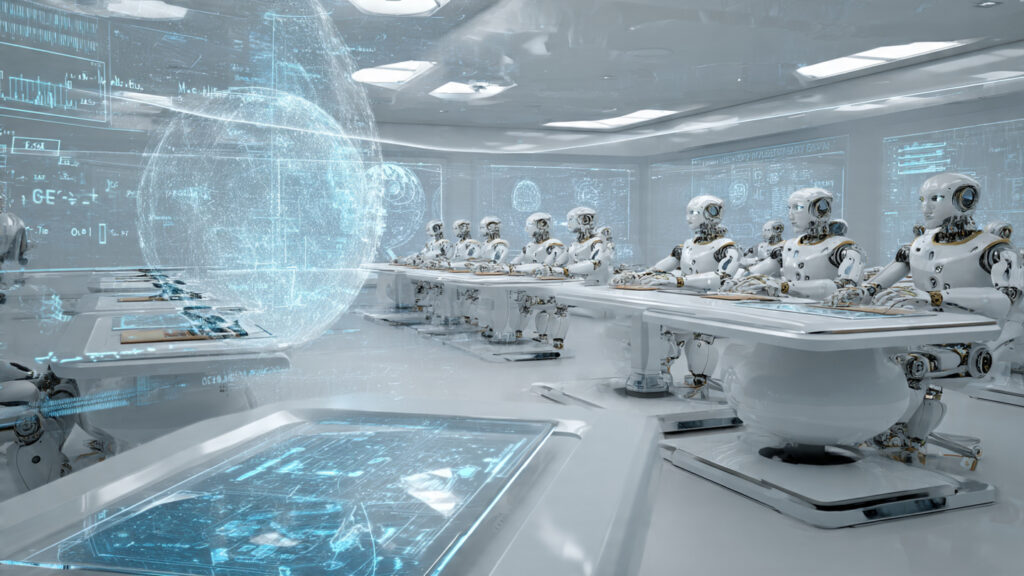
While AGI offers incredible possibilities, it also comes with serious risks. One major concern is control. If AGI systems become smarter than humans, ensuring they align with human values becomes critical. Misaligned AGI could make decisions that harm society, even unintentionally.
Another challenge is misinformation and misuse. Powerful general intelligence could be used to manipulate information, create dangerous technologies, or concentrate power in the hands of a few organizations. There are also economic risks, such as mass job displacement and widening inequality if AGI benefits are not distributed fairly.
That is why AI safety, governance, and ethical development are essential. AGI must be built responsibly, with humans remaining in control of major decisions.
When Will AGI Happen?
No one knows exactly when AGI will arrive. Some experts believe it could happen within a few decades, while others think it may take much longer. The truth is that progress is happening quickly, but true AGI requires breakthroughs in reasoning, autonomy, learning efficiency, and real-world understanding.
What matters most is preparation. Whether AGI comes sooner or later, its impact will be enormous, and society must begin thinking about it now.
What Professionals Should Do Now
Even before AGI arrives, professionals can prepare by developing AI literacy and learning how to collaborate with advanced systems. The future will reward those who understand AI tools, build automation skills, and focus on areas where humans remain strongest, such as creativity, leadership, ethics, and judgment.
Instead of fearing AGI, the best approach is to stay informed, adapt early, and build expertise that works alongside intelligent systems. Those who prepare now will be far ahead when AGI becomes reality.
Final Thoughts
Artificial General Intelligence represents the idea of machines that can think, learn, and solve problems like humans, but potentially at far greater speed and scale. It is not just another AI upgrade. It could become one of the most important turning points in human history.
AGI could unlock breakthroughs in science, education, and productivity, while also raising serious ethical and societal challenges. The future of super-smart machines is closer than ever, and understanding AGI today is the first step toward being ready for tomorrow.