
What Makes Agentic AI Different
Artificial intelligence has moved far beyond simple tools that respond to commands. Agentic AI represents a major shift in how machines operate. Instead of waiting for instructions, agentic AI systems can set goals, plan steps, make decisions, and take actions on their own.
This change matters because modern digital environments are fast, complex, and unpredictable. In such settings, reactive AI is often too slow or limited. Agentic AI, however, behaves more like a proactive collaborator—continuously assessing situations and adjusting actions to reach desired outcomes.
As organizations seek automation that actually reduces human workload rather than just speeding up tasks, agentic AI is becoming one of the most important developments in the AI landscape.
What Is Agentic AI?
Agentic AI refers to artificial intelligence systems designed to act as independent agents. These agents are not just prediction engines. Instead, they possess the ability to:
- Define or accept goals
- Plan multiple steps toward those goals
- Make decisions based on changing conditions
- Execute actions across systems
- Evaluate results and adapt behavior
In contrast to traditional AI models that respond to a single input with a single output, agentic AI operates over time. It maintains context, tracks progress, and continuously refines its approach.
Because of this, agentic AI is especially useful in environments where problems cannot be solved with one-step answers.
How Agentic AI Works Internally
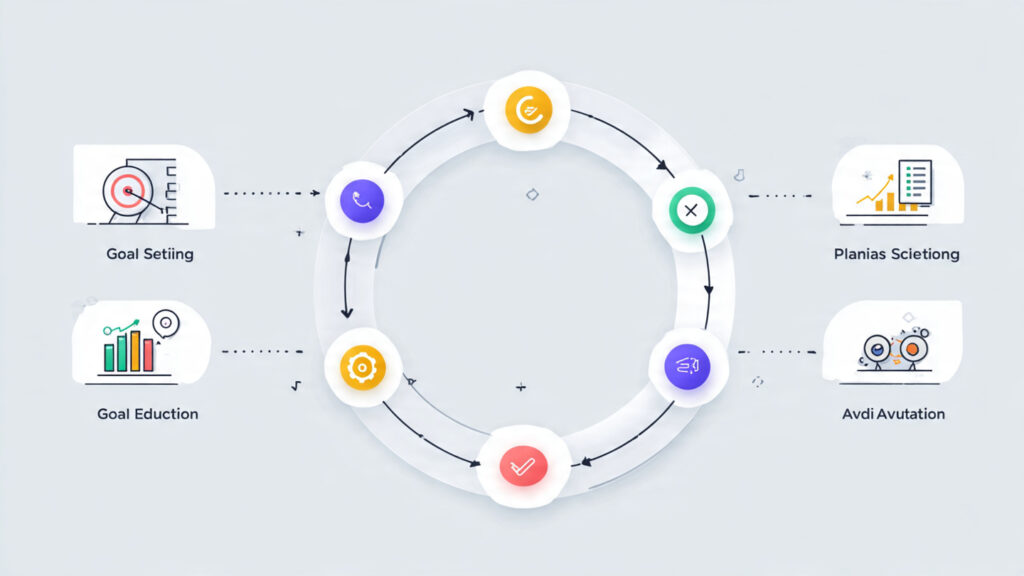
At the core of agentic AI is a loop that closely resembles human problem-solving.
First, the system understands the objective. This objective may be assigned by a user or inferred from a situation. Next, the agent breaks the goal into manageable sub-tasks. It then selects tools, data sources, or actions needed to move forward.
An AI agent works by moving beyond simple command-response behavior. Instead of waiting for instructions at every step, it operates with a goal in mind and figures out how to reach that goal on its own.
The process usually begins with goal understanding. An AI agent receives a clear objective, such as increasing user engagement, resolving customer queries, or optimizing a workflow. Rather than executing a single task, it interprets the goal and breaks it into smaller, achievable steps.
Once the goal is defined, the agent enters the planning phase. Here, it evaluates possible actions, considers available tools, and decides the most efficient path forward. This planning is dynamic, meaning the agent can revise its plan if conditions change or new information appears.
The next stage is action execution. The agent performs tasks using connected tools or systems. For example, it may query databases, trigger APIs, generate content, analyze data, or interact with other software services. Unlike traditional automation, these actions are not rigidly scripted. The agent chooses what to do based on context and outcomes.
After acting, the agent performs evaluation and feedback analysis. It checks whether the action moved it closer to the goal. If the result is successful, it proceeds to the next step. If not, it adapts by adjusting its strategy, selecting a different approach, or refining its plan.
A key component that enables this adaptability is memory. AI agents often store short-term context, such as recent actions and results, and long-term knowledge, such as learned preferences or historical patterns. This allows the agent to improve performance over time rather than repeating the same mistakes.
Another important feature is tool awareness. Modern AI agents know which tools they can use and when to use them. They can decide whether to search for information, perform calculations, generate responses, or delegate subtasks to other agents. This decision-making capability is what makes agentic AI feel proactive rather than reactive.
In more advanced systems, multiple agents can work together. One agent may handle research, another execution, and another monitoring. These agents communicate and coordinate, allowing complex tasks to be completed efficiently without constant human oversight.
Importantly, agentic AI systems often integrate large language models, memory components, planning modules, and external tools. Together, these elements allow the AI to operate with persistence and adaptability rather than simple responsiveness.
Agentic AI vs Traditional AI Systems
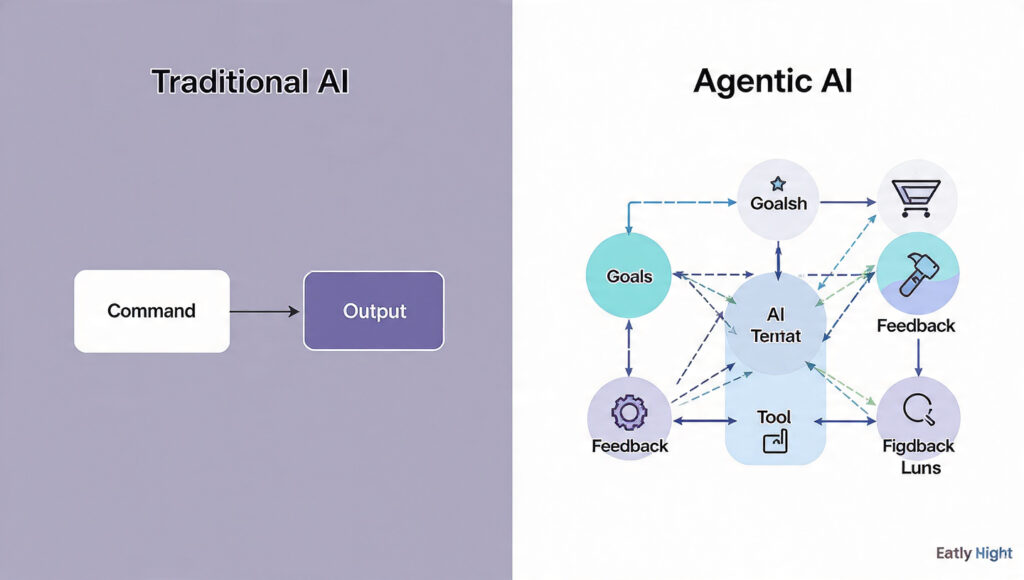
Understanding agentic AI becomes easier when compared with earlier AI approaches.
Traditional AI systems are typically reactive. They wait for a prompt, process it, and return a result. Once the response is delivered, the task ends. Even advanced models with high accuracy still operate within this single-turn framework.
Agentic AI, on the other hand, is goal-driven. It does not stop after one response. Instead, it keeps working until the objective is met. This makes agentic AI far better suited for complex workflows, long-running tasks, and environments where conditions evolve continuously.
As a result, agentic AI feels less like a tool and more like a digital worker.
Why Agentic AI Is Gaining Attention Now
Several trends have converged to make agentic AI practical and valuable.
First, language models have reached a level where they can reason, plan, and understand instructions with high reliability. Second, tool integration has improved, allowing AI systems to interact with APIs, databases, browsers, and software platforms. Third, businesses are facing growing pressure to operate faster with fewer human resources.
Because of these factors, agentic AI is no longer a research concept. It is becoming a real solution for productivity, operations, and decision-making challenges.
Core Capabilities of Agentic AI
Autonomous Planning
Agentic AI systems can create step-by-step plans without human guidance. When faced with a goal, the agent determines what actions are required and in what order. This ability reduces the need for constant supervision.
Context Awareness
Unlike simple automation scripts, agentic AI maintains context across interactions. It remembers previous actions, understands ongoing constraints, and adjusts decisions accordingly.
Tool Usage
Agentic AI can select and use tools dynamically. This may include querying databases, calling APIs, running scripts, or interacting with software interfaces. The agent decides which tool is appropriate at each step.
Self-Correction
When actions fail or produce unexpected results, agentic AI can reassess the situation. Instead of stopping, it tries alternative approaches until progress is achieved.
Real-World Use Cases of Agentic AI
Business Process Automation
In business environments, agentic AI can manage workflows end to end. For example, an agent may monitor sales data, identify underperforming regions, generate reports, and recommend actions without human intervention.
Software Development Assistance
Agentic AI is increasingly used to handle coding-related tasks. An agent can review a repository, identify bugs, suggest fixes, implement changes, and test results. This dramatically reduces development time for routine tasks.
Customer Support Operations
Rather than answering isolated questions, agentic AI can manage entire customer cases. It can gather context, interact with internal systems, escalate issues when needed, and follow up until resolution.
Research and Analysis
Agentic AI excels at multi-step research. It can search sources, compare findings, synthesize insights, and refine conclusions iteratively. This makes it useful for market research, competitive analysis, and policy evaluation.
Multi-Agent Systems: When AI Agents Work Together
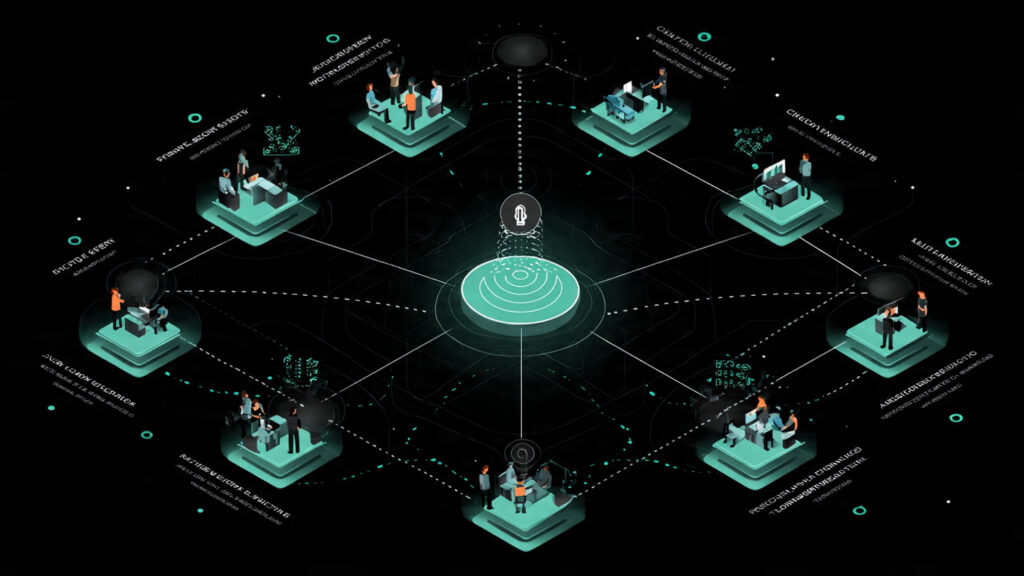
One of the most powerful extensions of agentic AI is the use of multiple agents collaborating on a shared objective.
In a multi-agent system, each agent may specialize in a different role. One agent gathers information, another evaluates risks, while a third executes actions. Through coordination, these agents solve problems that would be difficult for a single system.
This approach mirrors how human teams operate and allows AI systems to scale across complex tasks.
Risks and Challenges of Agentic AI
Despite its benefits, agentic AI introduces new challenges.
Autonomy increases the risk of unintended actions. If goals are poorly defined, an agent may optimize for the wrong outcome. Additionally, debugging agentic systems is more complex because decisions emerge from multiple interacting components.
There are also governance concerns. Organizations must define boundaries, permissions, and oversight mechanisms to ensure agents act responsibly.
Therefore, successful deployment of agentic AI requires careful design, monitoring, and human-in-the-loop safeguards.
Ethical and Control Considerations

As agentic AI becomes more autonomous, questions about accountability grow more urgent. When an AI agent makes a decision that causes harm, responsibility must be clearly defined.
To address this, developers are incorporating constraints, transparency mechanisms, and audit trails. These features help ensure that agentic AI remains aligned with human values and organizational policies.
Ethical design is not optional in agentic AI—it is foundational.
How Businesses Can Prepare for Agentic AI
Organizations interested in agentic AI should start by identifying workflows that involve repetitive decision-making and multi-step execution. These areas offer the highest return on automation.
Next, businesses should invest in clean data, tool integration, and clear goal definitions. Agentic AI performs best when it operates within well-structured environments.
Finally, teams must develop new skills focused on supervising AI agents rather than micromanaging tasks. This shift represents a cultural change as much as a technical one.
The Future of Agentic AI
Agentic AI is still evolving, but its trajectory is clear. Systems will become more capable, more collaborative, and more deeply integrated into daily operations.
In the future, agentic AI may manage entire departments, coordinate digital ecosystems, and act as a strategic partner rather than a support tool. As this happens, the distinction between human and machine work will continue to blur.
Those who understand and adopt agentic AI early will gain a significant advantage in efficiency, adaptability, and innovation.