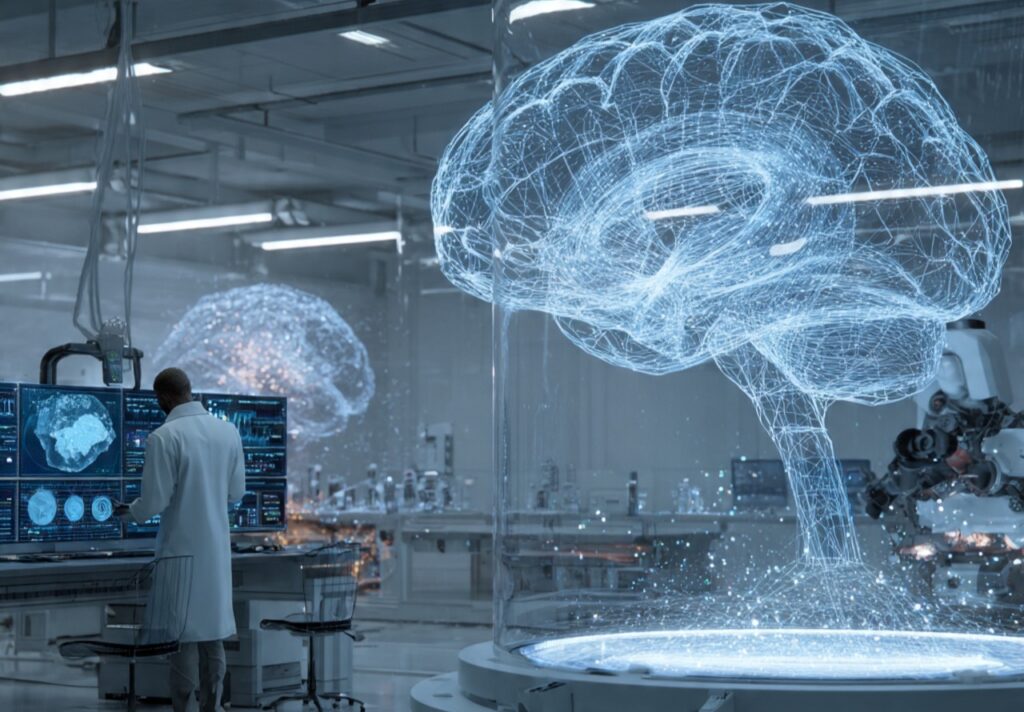
The Evolution Path of Artificial Intelligence: From Machine Learning to Generative AI

Artificial intelligence has evolved rapidly over the past few decades. What started as simple rule-based systems has now transformed into highly advanced generative technologies capable of producing text, images, videos, and even complex solutions to real-world problems. Understanding the evolution of artificial intelligence helps individuals and businesses recognize how modern AI systems emerged and where the technology is heading.
The evolution of artificial intelligence did not occur overnight. Instead, it progressed through several technological stages, each improving the ability of machines to learn, analyze, and generate intelligent outputs. From machine learning to deep learning and finally to generative AI, every stage introduced new capabilities that expanded the role of AI across industries.
Today, AI powers recommendation systems, predictive analytics, autonomous vehicles, virtual assistants, and creative tools. However, to fully appreciate these advancements, it is important to understand the developmental path that led to modern AI systems.
Rule-Based Artificial Intelligence: The Beginning

Before machine learning emerged, early AI systems relied on rule-based programming. In this stage, computers followed predefined instructions created by human experts. These systems used logical rules and decision trees to process information and deliver outputs.
Although rule-based AI was useful in controlled environments, it had significant limitations. Systems could only perform tasks that were explicitly programmed. If a new situation appeared outside the defined rules, the system failed to respond correctly.
Nevertheless, rule-based systems laid the foundation for the evolution of artificial intelligence. They demonstrated that machines could mimic certain aspects of human decision-making, even though flexibility and learning ability were still missing.
Machine Learning: The First Major Leap
The next stage in the evolution of artificial intelligence was Machine Learning. Instead of relying solely on predefined rules, machine learning algorithms learn patterns from data. This approach allows computers to improve performance automatically as more data becomes available.
Machine learning models analyze large datasets to identify correlations and relationships. For example, spam filters learn to identify unwanted emails by analyzing thousands of examples. Similarly, recommendation systems suggest products or movies by examining user behavior.
One key advantage of machine learning is adaptability. As new data arrives, models can update their predictions without requiring manual reprogramming. This capability significantly expanded the applications of AI in finance, healthcare, marketing, and technology.
However, machine learning still required structured data and human guidance for feature engineering. This limitation led researchers to develop more advanced approaches capable of learning deeper patterns automatically.
Deep Learning: Learning Through Neural Networks
The next stage in the evolution of artificial intelligence is Deep Learning, a specialized branch of machine learning. Deep learning uses artificial neural networks inspired by the structure of the human brain. These networks contain multiple layers that process data in increasingly complex ways.
In deep learning systems, each layer extracts different features from input data. For example, in image recognition tasks, early layers may detect edges and shapes, while deeper layers identify objects such as faces or vehicles. This layered learning process allows deep learning models to understand complex patterns.
Deep learning has revolutionized several industries. Speech recognition systems, language translation tools, and autonomous driving technologies rely heavily on deep learning models. Additionally, deep learning enables computers to analyze unstructured data such as images, videos, and natural language.
Because deep learning models require large datasets and powerful computing resources, advancements in cloud computing and GPU processing played a critical role in accelerating their development.
Natural Language Processing: Understanding Human Language
As AI technologies advanced, researchers focused on enabling machines to understand human communication. This led to the development of Natural Language Processing, commonly referred to as NLP.
Natural language processing allows AI systems to interpret, analyze, and generate human language. Applications include chatbots, voice assistants, sentiment analysis tools, and automated translation systems. These technologies make interactions between humans and machines more natural and intuitive.
NLP systems rely heavily on deep learning techniques to understand grammar, context, and meaning within large text datasets. Modern AI assistants use NLP to answer questions, summarize documents, and assist users with complex tasks.
The integration of NLP with machine learning and deep learning significantly improved the ability of AI systems to process human communication effectively.
Generative AI: The Creative Phase of Artificial Intelligence
The most recent stage in the evolution of artificial intelligence is Generative AI. Unlike traditional AI systems that primarily analyze data, generative AI can create entirely new content based on learned patterns.
Generative AI models are trained on massive datasets containing text, images, music, and other forms of media. By understanding patterns within this data, these models can generate original outputs that resemble human-created content.
Applications of generative AI are expanding rapidly. Businesses use generative AI for content creation, marketing campaigns, product design, and software development. Creative industries are also experimenting with AI-generated art, music, and storytelling.
Generative AI systems rely on advanced deep learning architectures, particularly transformer models. These architectures enable AI to process vast amounts of information and generate coherent, context-aware outputs.
The Rise of Multimodal AI
Another emerging stage in the evolution of artificial intelligence is Multimodal AI. Traditional AI models typically process one type of data at a time, such as text or images. Multimodal AI systems, however, can analyze and generate multiple data types simultaneously.
For example, a multimodal AI system might analyze an image, understand a spoken question about the image, and provide a detailed textual explanation. This capability enables more sophisticated interactions between humans and machines.
Multimodal AI is particularly valuable in fields such as healthcare diagnostics, autonomous vehicles, education, and digital content creation. By combining information from multiple sources, AI systems can produce more accurate and context-aware insights.
Future Path of Artificial Intelligence
The evolution of artificial intelligence continues to progress beyond generative systems. Researchers are exploring technologies such as autonomous AI agents, explainable AI, and artificial general intelligence. These innovations aim to make AI systems more reliable, transparent, and capable of solving complex problems.
Another important direction is collaborative intelligence, where humans and AI systems work together to enhance productivity and creativity. Instead of replacing human workers, future AI tools are expected to augment human capabilities.
Ethical AI development is also becoming a major focus. As AI systems become more powerful, ensuring fairness, transparency, and accountability is essential for maintaining public trust.
How Individuals Can Prepare for the AI Future
Understanding the evolution of artificial intelligence helps individuals identify valuable skills for the future. Professionals working in technology, data science, marketing, and business can benefit from learning how AI systems operate.
Skills such as machine learning fundamentals, data analysis, prompt engineering, and AI integration are becoming increasingly valuable. Additionally, individuals who combine technical knowledge with domain expertise can unlock unique career opportunities.
Continuous learning is essential in the rapidly evolving AI landscape. Online courses, research papers, and practical experimentation with AI tools allow professionals to stay ahead of technological advancements.
Conclusion
The evolution of artificial intelligence demonstrates how rapidly technology can transform society. Starting from simple rule-based systems, AI progressed through machine learning, deep learning, natural language processing, and generative AI. Each stage introduced new capabilities that expanded the potential of intelligent systems.
Today, AI is no longer limited to analyzing information. It can create, predict, communicate, and assist humans in complex decision-making processes. As new innovations emerge, the next stages of AI development will likely bring even greater breakthroughs.
Understanding the evolutionary path of AI provides valuable insight into how this technology will shape industries, careers, and everyday life in the years ahead.