
20 Best Growth Strategies for Modern Businesses
Modern business growth is no longer driven by size alone. While expansion once meant opening new locations or hiring more people, today it requires intelligence, adaptability, and precision. Markets change rapidly, technology evolves constantly, and customer expectations continue to rise.
At the same time, artificial intelligence and digital systems learn from every interaction. As businesses grow, they feed data into shared intelligence networks that influence future decisions, recommendations, and behaviors. Therefore, growth strategies must be intentional, sustainable, and aligned with long-term value.
The following are the best growth strategies for modern businesses, designed to help companies scale responsibly while remaining competitive in an AI-driven economy.
1. Customer-Centric Growth Strategy

Customer-centric growth begins by understanding customers beyond surface-level demographics. Modern businesses analyze behaviors, preferences, feedback, and emotional triggers to identify what truly matters to their audience. This deeper insight allows companies to design solutions that solve real problems rather than assumed ones.
When customers feel understood, trust develops naturally. Trust, in turn, leads to loyalty. Loyal customers engage more frequently, stay longer, and recommend brands to others. As a result, growth becomes organic rather than forced.
Additionally, customer-centric organizations adapt faster. Continuous feedback loops allow businesses to refine offerings, improve experiences, and remain relevant even as markets shift.
2. Data-Driven Decision Making

Data-driven growth replaces guesswork with clarity. Instead of relying solely on intuition, modern businesses collect and analyze data from every touchpoint, including websites, apps, customer interactions, and transactions.
This data reveals what drives engagement, where friction exists, and how customers move through the buying journey. AI-powered analytics further enhance decision-making by identifying trends and predicting outcomes.
As a result, businesses allocate resources more effectively, reduce waste, and scale with confidence. Data transforms growth from a gamble into a strategy.
3. Leveraging Artificial Intelligence for Scale

Artificial intelligence allows businesses to grow without proportionally increasing costs. AI automates repetitive tasks, optimizes workflows, and enhances accuracy across operations.
In customer-facing areas, AI personalizes experiences through recommendations, targeted messaging, and intelligent support systems. These personalized interactions increase satisfaction and conversion rates.
Over time, AI systems improve by learning from data. This creates compounding value, where growth strengthens intelligence and intelligence accelerates growth.
4. Product-Led Growth
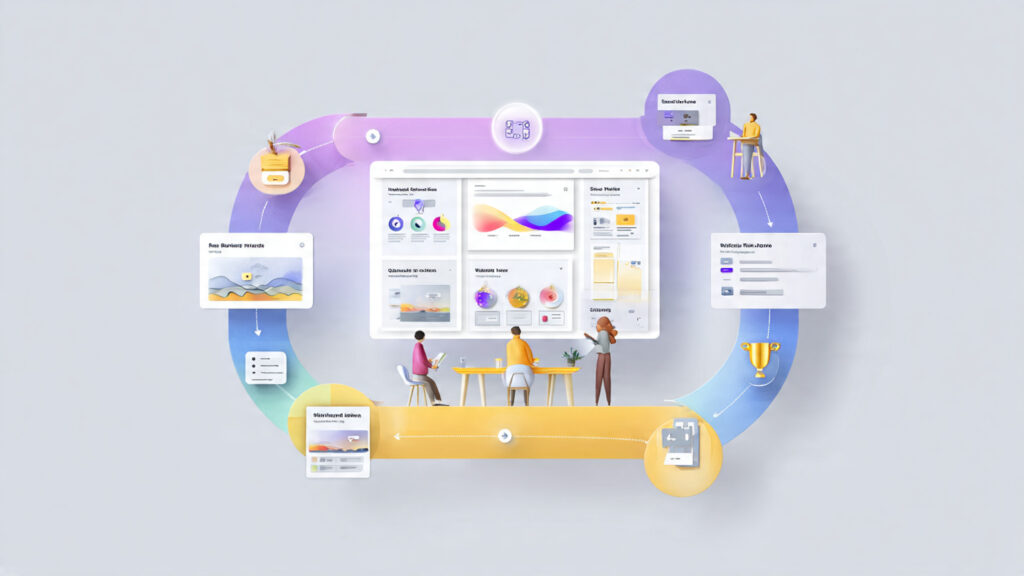
Product-led growth shifts focus from selling to experiencing. Instead of relying on aggressive marketing, businesses allow users to experience value directly through the product itself.
Free trials, freemium models, and intuitive onboarding reduce barriers to entry. When users experience real benefits, adoption feels natural rather than pressured.
As trust builds, users convert into paying customers. This approach lowers acquisition costs while improving retention and lifetime value.
5. Building Scalable Digital Infrastructure

Scalable infrastructure supports growth without disruption. Modern businesses rely on cloud platforms, modular systems, and automation to handle increasing demand.
Without scalability, growth creates friction. Systems crash, performance declines, and customer experience suffers. Scalable infrastructure prevents these issues.
Furthermore, flexible systems allow businesses to adapt quickly. New features, markets, and integrations can be deployed efficiently, supporting long-term expansion.
6. Content-Driven Growth

Content-driven growth builds authority and trust over time. High-quality content educates audiences, answers questions, and positions businesses as industry leaders.
Blogs, videos, guides, and case studies attract organic traffic and support SEO visibility. Unlike paid advertising, content compounds in value.
As audiences engage with valuable content, trust develops. This trust shortens buying cycles and strengthens brand loyalty.
7. Strategic Partnerships and Alliances

Partnerships allow businesses to grow faster by leveraging shared strengths. Instead of building everything internally, companies collaborate with complementary organizations.
These alliances expand reach, reduce costs, and introduce offerings to new audiences. Additionally, partnerships often spark innovation through shared knowledge.
When aligned strategically, partnerships create mutual growth rather than competition.
8. Market Expansion Through Localization

Global growth requires local relevance. Localization adapts products, messaging, and experiences to regional cultures, languages, and expectations.
Customers respond positively when businesses respect local norms. Payment methods, support channels, and communication styles matter deeply.
By localizing thoughtfully, businesses create authentic connections that support sustainable expansion.
9. Community-Led Growth

Community-led growth builds relationships rather than transactions. Communities create spaces where customers interact, share experiences, and support one another.
As engagement deepens, loyalty increases. Community members often advocate for brands organically, reducing marketing costs.
Over time, strong communities become self-sustaining ecosystems that drive retention and innovation.
10. Continuous Innovation Strategy

Innovation ensures relevance. Businesses that continuously improve products, processes, and experiences adapt faster to change.
Rather than waiting for major breakthroughs, incremental improvements compound over time. Small innovations often produce significant long-term impact.
Continuous innovation fosters a culture of learning, experimentation, and resilience.
11. Pricing Optimization and Value Perception

Pricing influences perception. Modern growth strategies align pricing with value rather than cost alone.
Data-driven pricing models analyze customer behavior, demand, and willingness to pay. AI further optimizes pricing dynamically.
When pricing reflects perceived value, businesses increase revenue without sacrificing trust.
12. Retention-Focused Growth

Retention strengthens growth efficiency. Acquiring new customers costs significantly more than retaining existing ones.
Retention strategies include personalized experiences, proactive support, and consistent value delivery. Loyal customers stay longer and spend more.
By reducing churn, businesses unlock sustainable growth and stability.
13. Omnichannel Presence

Modern customers move seamlessly across platforms. Businesses must deliver consistent experiences across websites, apps, social media, and offline channels.
Omnichannel strategies reduce friction and improve engagement. Customers feel recognized regardless of where they interact.
Consistency builds trust and reinforces brand identity.
14. Automation for Operational Efficiency

Automation increases speed, accuracy, and scalability. Tasks such as onboarding, billing, reporting, and communication benefit greatly.
By reducing manual work, teams focus on strategy and creativity. This improves morale and productivity.
Automation enables growth without proportional increases in workload.
15. Talent-Driven Growth
People power innovation. Skilled teams execute strategies, adapt to change, and create value.
Talent-driven growth invests in hiring, development, and culture. Empowered employees contribute ideas and drive improvement.
Strong teams amplify every growth initiative.
16. Experimentation and Agile Execution
Growth requires learning through action. Agile methodologies support rapid testing and iteration.
Experiments reveal what works and what does not. Failure becomes insight rather than loss.
Agility allows businesses to respond quickly to market changes.
17. Brand Storytelling and Emotional Connection
Stories humanize brands. Emotional connection differentiates businesses beyond features and pricing.
Authentic storytelling builds trust and loyalty. Customers align with purpose, not just products.
Strong brand narratives support long-term growth.
18. Ethical and Sustainable Growth
Ethics influence trust. Modern consumers value transparency, responsibility, and sustainability.
Ethical practices protect reputation and reduce risk. Sustainable growth aligns profit with social impact.
Responsibility strengthens long-term success.
19. Leveraging Platform Ecosystems
Platforms extend distribution. Marketplaces, app stores, and integrations provide access to established audiences.
By embedding within ecosystems, businesses scale faster with lower acquisition costs.
External reference:
https://www.forbes.com/sites/forbestechcouncil/2023/01/10/business-growth-strategies
20. Long-Term Vision With Short-Term Execution
Vision provides direction. Execution delivers results.
Successful businesses align long-term goals with daily actions. Flexibility allows adaptation without losing focus.
Growth thrives on clarity and discipline.