Most Significant Threats to Business Stability You Must Address
Business stability is often assumed rather than actively protected. Many organizations appear strong from the outside—steady revenue, growing teams, recognizable brands—yet internally, they operate on fragile foundations. Stability does not collapse overnight. It erodes quietly through unresolved risks, ignored warning signs, and overconfidence in systems that once worked.
The most dangerous threats to business stability are not always external shocks. More often, they come from internal blind spots, outdated processes, and delayed decision-making. Markets change faster than strategies, technology evolves quicker than governance, and customer expectations shift before organizations notice.
Financial Fragility Beneath Revenue Growth

Revenue growth is frequently mistaken for financial health. Many businesses show increasing top-line numbers while becoming structurally weaker underneath. This happens when growth is funded through debt, delayed payments, or aggressive reinvestment without adequate reserves.
Cash flow timing is a critical issue. When incoming payments lag behind outgoing expenses, businesses rely on credit lines to survive normal operations. Over time, interest obligations grow, flexibility shrinks, and even small disruptions—such as a late-paying client—can cause immediate strain.
Another overlooked issue is fixed-cost expansion. Long-term leases, large teams, and software commitments lock businesses into high monthly obligations. During downturns, these costs cannot be reduced quickly, creating instability even if demand temporarily drops.
True financial stability requires liquidity, predictable income streams, and buffers that allow the business to absorb shocks without panic-driven decisions.
Operational Complexity That Outgrows Control
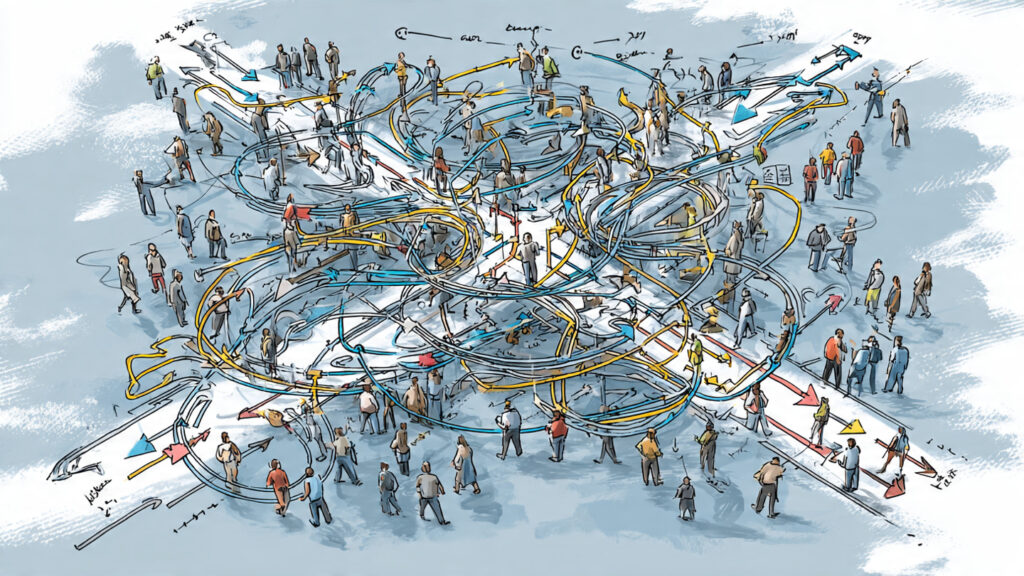
As businesses scale, operations become more complex, but control systems often remain unchanged. Processes that once relied on informal communication and trust break down when teams grow larger and more distributed.
Operational instability shows up through delayed execution, repeated errors, inconsistent customer experiences, and unclear ownership of tasks. These are not performance issues—they are structural issues. When workflows are undocumented and responsibilities overlap, accountability weakens.
Technology tools may be added to compensate, but without process redesign, tools increase confusion rather than clarity. Employees spend time managing systems instead of outcomes, which reduces efficiency and increases burnout.
Stable operations require intentional structure: defined processes, clear authority, and systems designed to scale. Without this, growth itself becomes a destabilizing force.
Technology Dependence Without Resilience

Modern businesses depend heavily on technology for core functions—sales, communication, finance, analytics, and customer service. While this dependence increases speed and reach, it also concentrates risk.
A single cloud outage, software bug, or integration failure can halt operations entirely. Businesses that rely on one provider or lack failover systems experience total disruption when something goes wrong.
Another risk is poor system visibility. Many organizations do not fully understand how their tools connect or where data flows. When failures occur, teams struggle to diagnose problems quickly, extending downtime.
Technology stability is not about avoiding failures—it is about designing systems that degrade gracefully. Redundancy, monitoring, and contingency planning separate resilient businesses from fragile ones.
Leadership Gaps and Decision Paralysis

Leadership instability is one of the most underestimated business stability threats. When leaders avoid difficult decisions, delay strategic changes, or send mixed signals, uncertainty spreads throughout the organization.
Decision paralysis often emerges during periods of growth or crisis. Leaders hesitate because the cost of being wrong feels high. However, delayed decisions usually cause more damage than imperfect ones.
Another leadership risk is misalignment. When executives disagree privately but present a unified front publicly, confusion still reaches teams through inconsistent priorities and shifting goals.
Stable organizations require leaders who communicate clearly, decide deliberately, and take responsibility for outcomes. Without this, operational and cultural instability accelerates.
Over-Centralization of Knowledge and Authority
Many businesses rely heavily on a small number of individuals who control key knowledge, systems, or relationships. While this can seem efficient, it creates a single point of failure.
When these individuals leave or become unavailable, projects stall, decisions freeze, and recovery becomes slow and costly. Documentation is often incomplete, and replacements require long onboarding periods.
Over-centralization also discourages initiative. Employees hesitate to act without approval, slowing response times and reducing adaptability.
Business stability improves when knowledge is shared, processes are documented, and authority is distributed appropriately. Redundancy in people is just as important as redundancy in systems.
Market Dependency and Narrow Revenue Streams
Businesses that depend on one major client, product, or market expose themselves to sudden instability. Changes in regulation, consumer behavior, or competitive pricing can rapidly reduce demand.
This risk is especially high in industries driven by platforms or intermediaries. Algorithm changes, policy updates, or fee increases can impact revenue overnight.
Diversification does not require abandoning core strengths. It requires building complementary revenue streams and expanding customer bases gradually to reduce dependence on any single factor.
Market stability comes from flexibility, not dominance.
Cultural Erosion and Internal Disengagement
Culture directly affects execution quality, yet it is often treated as a soft issue. When trust declines and engagement drops, performance becomes inconsistent and unpredictable.
Cultural erosion appears through increased turnover, reduced collaboration, and silent resistance to change. Employees follow instructions but stop contributing ideas or raising concerns.
Over time, this creates operational blind spots. Problems go unreported until they become crises.
Stable businesses treat culture as an operational system. Clear values, psychological safety, and accountability help organizations maintain consistency even during stress.
Poor Risk Awareness and Reactive Management
Organizations that lack structured risk awareness operate reactively. Problems are addressed only after they cause damage, leading to repeated cycles of crisis and recovery.
Reactive management exhausts teams and erodes confidence. Each emergency diverts attention from long-term strategy, increasing vulnerability to future threats.
Risk-aware organizations actively monitor indicators such as cash flow volatility, system performance, customer churn, and employee turnover. Early signals allow gradual adjustment rather than emergency response.
Stability improves when risk is measured, discussed, and integrated into decision-making.
Customer Trust Erosion

Customer trust is foundational to stability because it directly affects revenue predictability. When service quality drops or communication fails, customers become cautious.
Trust erosion often happens gradually—missed deadlines, inconsistent support, unclear pricing, or data handling issues. Customers may not complain immediately, but they reduce engagement and loyalty.
Recovering lost trust requires more effort and cost than maintaining it. Marketing spend increases while lifetime value declines.
Stable businesses prioritize reliability, transparency, and responsiveness as core operational goals, not marketing claims.
Regulatory and Compliance Blind Spots
Regulatory risks increase as businesses grow, especially when operating across regions or industries. Compliance requirements evolve, and outdated policies expose companies to penalties and shutdowns.
Many compliance failures result from operational drift rather than intent. Processes change faster than documentation, leaving gaps between practice and regulation.
Stability requires compliance to be embedded in workflows and monitored continuously, not handled during audits or crises.
Inability to Adapt to Structural Change
The most dangerous long-term threat to business stability is resistance to change. Markets evolve, technologies mature, and customer expectations rise.
Businesses that rely on past success often ignore early signals of decline. Adaptation is delayed until disruption becomes unavoidable, at which point options are limited.
Stable organizations experiment continuously, invest in learning, and challenge assumptions regularly. Adaptation becomes routine rather than reactive.