The Future of Professional Content Creation
Professional content creation is changing faster than any other industry skill right now. A few years ago, writing a blog post, designing a video script, or building a brand voice required a full team and long timelines. Today, one person with the right tools can produce in hours what used to take weeks.
However, the future is not simply about producing more content. The real shift is about producing content that feels more human, more trustworthy, and more useful in a world where automation is everywhere.
The creators and businesses who win in the future will not be the ones who create the most. Instead, they will be the ones who create the most meaningful, strategic, and credible content.
Let’s explore what is coming next, what is already changing, and how professionals can stay ahead.
Content Will Shift From Volume to Value
For years, content marketing rewarded quantity. Companies posted daily blogs, constant social media updates, and endless videos just to stay visible.
But now, AI has made content volume cheap. Anyone can generate thousands of words instantly. Because of this, audiences are becoming tired of repetitive, shallow information.
In the future, value will matter more than volume. Readers will not reward content that simply explains what they already know. They will reward content that solves problems, offers experience-based insight, and feels specific.
Professional creators must focus less on producing more and more, and more on producing content that actually helps someone take action.
AI Will Become a Standard Tool, Not a Competitive Advantage

Right now, AI content tools feel powerful because they are still new. Many creators think using AI gives them an edge.
However, soon AI will be like spell-check or Google Docs. Everyone will use it. It will no longer be special.
The real advantage will come from how creators use AI. Professionals will use it for:
- Drafting faster
- Research support
- Content repurposing
- Editing and clarity improvement
But the human creator will remain responsible for originality, judgment, tone, and trust.
AI will not replace creators. It will replace creators who refuse to evolve.
Trust and Authenticity Will Become the Main Currency
As AI-generated content spreads, audiences will start asking one question:
Can I trust this?
The future of professional content creation will reward credibility more than creativity alone. People will follow creators who show real expertise, real experience, and real accountability.
This means professional content must include:
- Proof and examples
- Clear opinions backed by reasoning
- Transparent sourcing
- Real-world lessons, not generic advice
In other words, trust will become the new SEO.
Content Will Become More Personalized and Audience-Specific
In the past, creators wrote one blog post for everyone. But future content will be more targeted.
AI systems already allow content personalization at scale. Businesses can adapt the same core message for:
- Different industries
- Different customer types
- Different levels of knowledge
- Different cultures and languages
Professional creators will need to think like strategists. Instead of asking “What should I post?” they will ask:
Who exactly am I helping, and what do they need today?
Multimedia Creation Will Become Mandatory, Not Optional
The future will not belong to text-only creators or video-only creators. Instead, content will become multi-format by default.
A single idea will turn into:
- A blog post
- A LinkedIn carousel
- A short video script
- A podcast discussion
- An email newsletter
- A downloadable guide
Creators who build systems for repurposing will grow faster than those who start from scratch every time.
AI tools will make this easier, but the strategy must come from the creator.
Human Creativity Will Shift Toward Taste and Direction
AI can generate content. But it cannot generate taste.
Taste means knowing:
- What is worth saying
- What is relevant now
- What your audience will care about
- What feels original and sharp
The future professional creator will not be valued for typing words. They will be valued for choosing the right message, the right framing, and the right angle.
In short, creators will become editors, directors, and thinkers, not just writers.
Professional Content Will Be Measured by Outcomes, Not Likes
The future of content creation will become more performance-driven.
Businesses will care less about views and more about results:
- Did the content build trust?
- Did it bring leads?
- Did it improve customer understanding?
- Did it reduce support questions?
- Did it influence decisions?
Creators who understand business outcomes will become far more valuable than creators who only chase engagement.
Communities Will Matter More Than Algorithms
Social algorithms change constantly. Organic reach is unstable. Platforms rise and fall.
The future belongs to creators who build direct relationships through:
- Email lists
- Private communities
- Membership platforms
- Niche networks
Instead of depending on platform traffic, professionals will build loyal audiences that follow them anywhere.
Community is future-proof. Algorithms are not.
The Future Creator Will Need Business Skills, Not Just Creative Skills
Professional content creators will increasingly operate like businesses.
They will need skills like:
- Positioning
- Offer creation
- Audience research
- Monetization strategy
- Brand consistency
The future creator is not just an artist. They are a strategist with creative execution.
What Professionals Should Do Now to Stay Ahead
To succeed in the future of professional content creation, start doing these things today:
Build a Personal Knowledge Vault
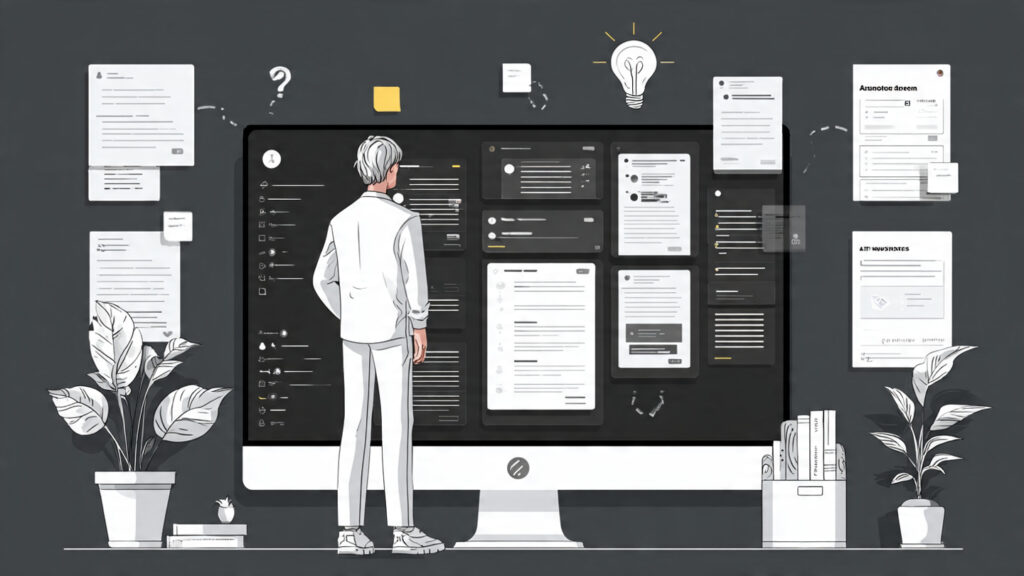
Most creators rely on inspiration, which is unreliable. The smartest professionals build a knowledge vault — a private library of insights, examples, frameworks, and audience problems.
Start collecting:
- Real questions clients ask you
- Common mistakes people make in your niche
- Case studies from your own work
- Strong analogies and explanations
- Data points and industry shifts
Store them in Notion, Google Docs, or Obsidian. Then every piece of content becomes easier because you are pulling from a deep resource, not starting from zero.
This is one of the most underrated advantages creators can build.
Create Content From Problems, Not Topics

Average creators choose topics like:
“Email marketing tips”
“AI trends”
“Business growth strategies”
Future-proof creators choose problems like:
“Why email open rates drop after 3 months”
“How founders waste money on AI tools”
“What to do when growth stops despite more ads”
Problem-based content is more valuable because it attracts people who need solutions, not people who are casually browsing.
Before writing anything, ask:
What specific pain does this solve?
Develop a Signature Framework That People Remember
AI can generate content. But AI cannot create your unique thinking structure.
Professionals who win build a signature framework such as:
- A 3-step method
- A checklist
- A repeatable process
- A unique way of diagnosing problems
For example:
“The Clarity Stack: Message → Proof → Action”
“The 5-Part Content Trust Model”
When people associate your name with a framework, you become harder to replace and easier to follow.
That is real authority.
Use AI Like a Content Engineer, Not a Content Generator
Most people misuse AI by saying:
“Write me a blog post.”
Professionals use AI in controlled stages:
- Generate outlines from real audience questions
- Rewrite paragraphs for clarity
- Repurpose long content into short formats
- Create alternative hooks and intros
- Summarize research papers quickly
The rule is simple:
Humans create direction. AI supports execution.
If AI creates everything, your content becomes generic.
Build a Repurposing Machine, Not a Posting Habit
The future is not about creating more content. It is about extracting more value from each idea.
A professional workflow looks like this:
One deep article becomes:
- 5 LinkedIn posts
- 2 short videos
- 1 email newsletter
- 1 carousel
- 1 downloadable checklist
This is how creators stay consistent without burnout.
The technique is called content compounding — one idea multiplies across platforms.
Add Proof Layers to Everything You Publish

In the AI era, trust will beat polish.
To make content credible, add proof layers such as:
- Real examples from work
- Screenshots of results
- Specific numbers or outcomes
- Stories of failure and lessons
- Clear reasoning behind advice
Instead of saying:
“Personal branding matters”
Say:
“I got 3 consulting clients from one case-study post because…”
That level of specificity cannot be replaced by AI noise.
Write for Decision-Makers, Not Just Readers
Future content will not win because it is interesting. It will win because it influences action.
Professionals should write content that helps people decide:
- What tool to choose
- What mistake to avoid
- What strategy to implement
- What step to take next
Every piece should answer:
What should the reader do differently after this?
That is professional content.
Own a Distribution Channel You Control
Algorithms are unstable. Platforms change. Reach disappears.
Creators who stay ahead build owned channels like:
- Email newsletters
- Private communities
- Direct client networks
- Podcasts with subscriber bases
Your email list is a long-term asset. Social media is rented attention.
Future-proof creators invest in ownership.
Become Industry-Specific, Not Generic
Generic creators will be replaced first.
Instead of being:
“A marketing writer”
Become:
“A B2B SaaS onboarding content specialist”
Instead of:
“A productivity creator”
Become:
“A productivity strategist for remote tech teams”
The more specific you are, the more valuable you become.
AI replaces generalists faster than specialists.
Create Content That Feels Like Experience, Not Information
Information is everywhere. Experience is rare.
Future-proof creators share:
- What worked for them
- What failed
- What surprised them
- What they learned the hard way
That is content AI cannot fake well.
People follow humans for lived insight, not definitions.
Treat Content Like a Product, Not a Post
The strongest creators stop thinking:
“What should I post today?”
They think:
“What content asset can I build that brings value for years?”
Examples:
- Evergreen guides
- Toolkits
- Templates
- Mini-courses
- Case study libraries
This turns content into a long-term business engine.